How Seamless Gutters Are Made: The On-Site Forming Process, Start to Finish
July 24, 2026
What to Check First When You Notice a Problem
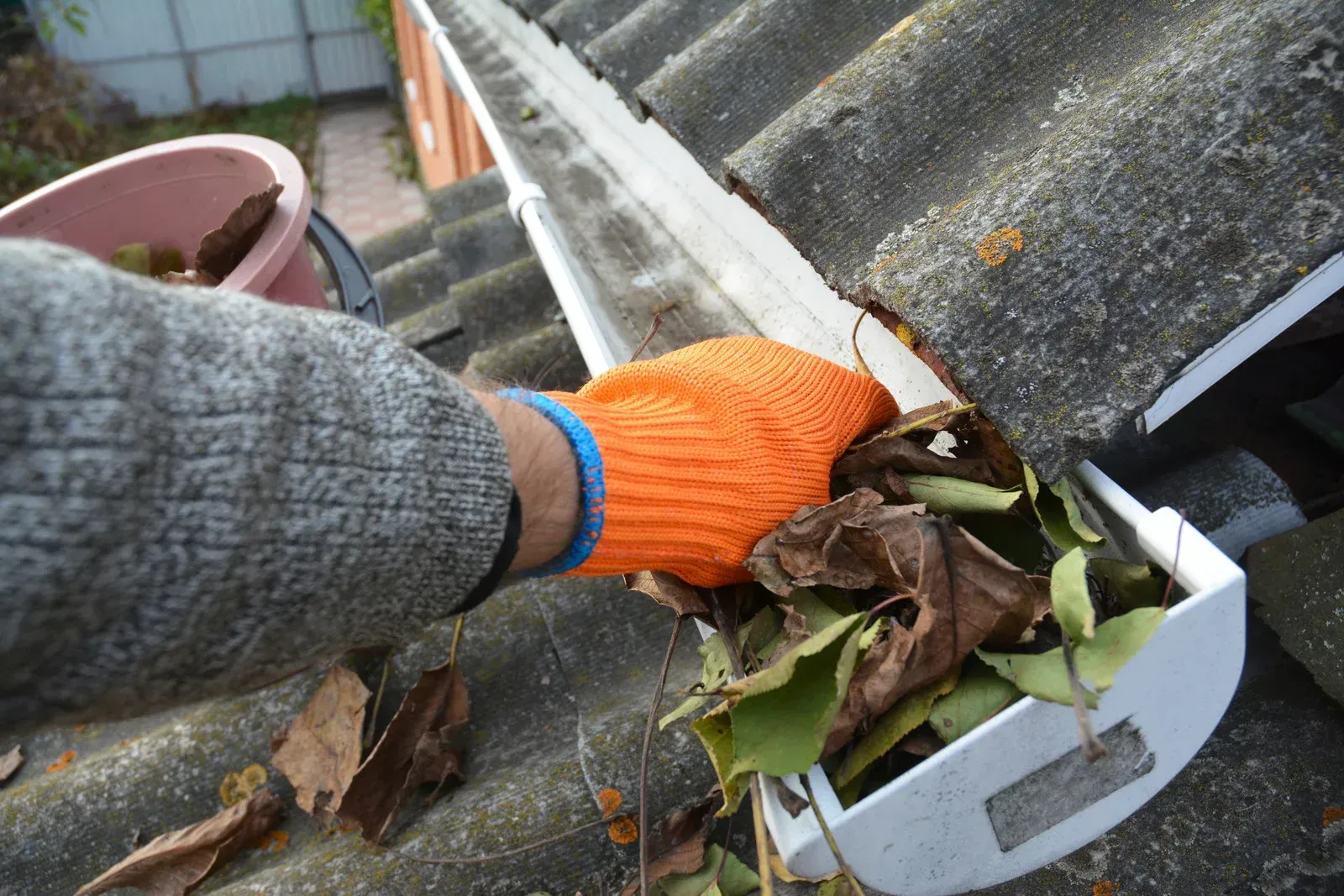
TIP: Pour a five gallon bucket of water into the gutter at the end farthest from the downspout. If it drains briskly and exits clean, your slope and outlet are fine and any issue is a localized clog. If it pools or backs up, you have a pitch problem or a deeper blockage.
QUICK ANSWER: Seamless gutters are made on site from a single coil of painted metal, usually aluminum but sometimes steel or copper. The coil feeds through a portable roll-forming machine parked at your property, and the machine bends the flat strip into a gutter shape while cutting it to the exact length of each roofline. Because the run comes out in one continuous piece, the only joints are at corners and where downspouts connect. Installers then fasten it to the fascia with hidden hangers and set a slight downhill slope so water drains toward the outlets.
Your gutters didn't come off a shelf. If you stood in the driveway the day a crew installed them, you'd have seen a long trailer, a spool of coiled metal, and a machine humming as it spat out a shiny channel one foot at a time. That channel gets longer and longer until it matches the run of your roof. No sections. No snapping pieces together. Just one clean length of metal cut to fit the house it's going on.
Most people picture gutters as parts you buy and bolt up. Seamless gutters flip that idea. The raw material shows up as flat metal, and the finished gutter is formed right there in the yard, sized to your roofline down to the inch. That's the whole point of the word "seamless," and it changes how the system holds up against Central Pennsylvania weather. Here's what actually happens from coil to corner.
It Starts With a Coil, Not a Warehouse Shelf
The first thing to understand is that a seamless gutter begins its life as a roll of flat metal called coil stock. These are long ribbons of painted, gutter-grade aluminum or copper, wound tight into a spool. A single coil is heavy. One roll runs around 350 pounds, which is why it gets loaded onto the machine with a forklift rather than by hand.
That coil is the backbone of the entire system. It's not scrap sheet metal. The stock is made for this one job, with a baked-on finish that shrugs off fading, chipping, and rust after years of sun and rain. It also comes in a range of colors, so the gutter can be matched to your trim, your siding, or the roof itself. Pick the color at the start, and every foot that comes off the machine wears it.
Crews often carry more than one spool in the truck. Extra coil spools hold backup material and guide the strip cleanly into the machine, and having a few on hand lets an installer swap colors fast if a house needs two shades. The coil sits on the spool, the leading edge gets threaded into the machine, and from there the forming begins.
The Machine That Rides to Your House
Here's the part that surprises people. The gutter isn't formed at a factory hours away. It's formed in your driveway by a roll-forming machine that lives on a trailer.
A gutter roll-forming machine is a long metal box with a series of rollers inside. As the flat coil feeds in one end, it passes through roller after roller, and each set bends the metal a little more. By the time the strip reaches the far end, that flat ribbon has been shaped into a full gutter profile, curved lip, flat back, and all. The machine runs off a portable generator, so the crew doesn't need to plug into your house or hunt for an outlet.
Because the metal is shaped as it moves, the run can be any length the roof needs. Want a 38-foot stretch across the back of the house with zero joints in the middle? The machine just keeps running until it's that long, then the piece gets cut. For long runs, the crew uses run-out stands, which are simple leg supports that catch the gutter as it exits so it doesn't kink, sag, or bend under its own weight before it's ready to go up.
I've watched folks assume the machine does everything. It doesn't. Hand tools still finish the job, crimpers for downspouts, shears for trimming, tools for shaping the corners. The machine forms the straight runs. The details are still done by hand.
TIP: When you get an estimate, ask the installer to show you the coil color chart and confirm the gutter is formed on site. A crew that fabricates at your house can fit odd rooflines and long runs without splicing sections together in the middle.
Measuring, Cutting, and Where the Only Seams Live
Before a single foot of metal runs, the roof gets measured. Every eave, every facet, every stretch of fascia is measured so the crew knows exactly how long each run needs to be. That's what makes the on-site approach work. The gutter is cut to the house, not the other way around.
Once a run is formed and cut to length, it's carried up and set in place. A house is never just one straight line, though. It has corners where two roof edges meet, and those corners are the one spot a seamless system still needs a joint. Installers call them miters. The gutter also gets an opening cut wherever a downspout drops down. So on a typical home, the only seams in the whole system are at the outside and inside corners and at the downspout outlets. Everything in between is one solid piece.
Compare that to the older style. Sectional gutters come pre-made in 10-foot lengths, and to cover a roofline, an installer connects piece after piece with joints and sealant. Every one of those joints is a weak spot waiting to happen. Sealant dries out and cracks. Sections pull apart as the metal expands and contracts through hot summers and cold winters. Water finds the gap and starts dripping behind the gutter. Around Selinsgrove and Lewisburg, where the freeze-thaw cycle works on everything all winter, those seams loosen faster than most homeowners expect. Fewer joints means fewer of those failures.
Hanging the Run and Setting the Slope
Forming the gutter is only half the work. Getting it to drain is the other half, and it comes down to two things: how it's held up, and how it's tilted.
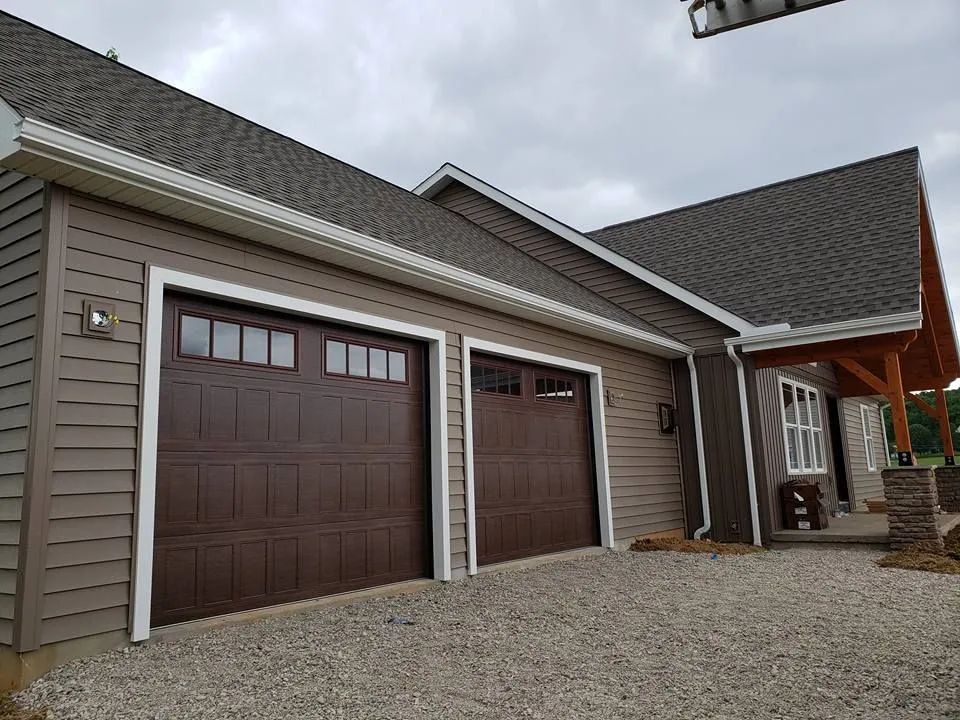
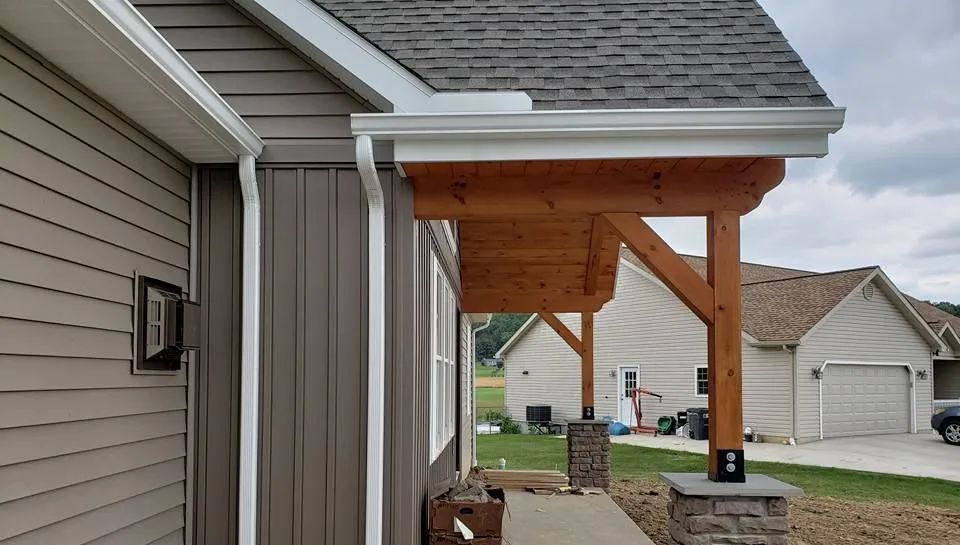
A gutter full of water is surprisingly heavy, so it can't just be tacked to the house. Installers use hidden hangers, brackets that clip inside the gutter and screw into the fascia board where you can't see them from the ground. These go in roughly every two feet along the run. Space them too far apart and the gutter bows in the middle the first time it fills during a storm. Two-foot spacing keeps the whole length rigid and straight.
Then there's slope. A gutter that sits dead level lets water pool and sit, which is exactly what you don't want when leaves and grit collect in the bottom. So the crew sets a slight downhill pitch toward each downspout, just enough that gravity pulls the water where it should go. Downspouts get placed so no single stretch of gutter has to move water too far on its own, and they carry it down and away from the foundation. Get the slope and the outlet spacing right, and the system drains itself. Get them wrong, and you've got standing water and overflow no matter how good the gutter is.
WARNING: A gutter that overflows in heavy rain is often a slope or downspout problem, not a clog. Water spilling behind the gutter can rot the fascia and soak the soffit before you ever see a stain inside. If your gutters pour over the front edge during a normal storm, get the pitch and outlet placement checked.
Residential and Commercial: Same Idea, Bigger Scale
The on-site forming process works the same whether it's a two-story farmhouse or a strip of storefronts. What changes is the size and shape of the gutter coming off the machine.
Homes usually get a 5-inch or 6-inch K-style gutter, the profile with the decorative front edge that looks a little like crown molding. It sheds the rain off a typical residential roof and matches the way most houses are trimmed. Step up to a commercial or industrial building, and the gutter gets bigger, 6-inch or 7-inch K-style, or a squared-off box style, to handle the much larger volume of water rolling off a big flat or low-slope roof. The bigger the roof, the more water it dumps in a hard rain, and the gutter has to keep up.
The forming happens on the same kind of machine either way. A commercial job just means longer runs, wider profiles, and often the heavier metal. That's the quiet advantage of forming on site. One setup in the parking lot or driveway can produce exactly the gutter each building needs, cut to its own measurements, without waiting on a factory order.
For Central PA especially, that custom fit earns its keep. The hardwoods here drop a heavy load of leaves every fall, and the winters swing between thaw and hard freeze over and over. A gutter formed to fit tight, hung solid, and pitched right stands up to all of that far better than a patchwork of joined sections. Fewer seams, fewer sags, fewer places for trouble to start.
Frequently Asked Questions
How are seamless gutters made on site?
A roll-forming machine on a trailer feeds flat coil stock through rollers that bend it into a gutter shape. Crews measure the roofline, then run the machine until it matches, and cut it on site.
Are seamless gutters really made from one piece of metal?
Along any straight run, yes. The gutter forms as one continuous length with no joints in the middle. The only seams are at corners, called miters, and where downspouts connect — not one every ten feet.
What metal are seamless gutters usually made from?
Aluminum is common for homes since it's light and won't rust. Steel, often galvalume, is heavier and used on commercial buildings. Copper is the premium choice for custom or historic homes, valued for its patina.
Why don't seamless gutters leak like sectional ones?
Sectional gutters join every ten feet with sealant that dries, cracks, and pulls apart as metal expands and contracts. Seamless runs skip those mid-length joints, so there are far fewer spots for water to escape.
How are seamless gutters held to the house?
Hidden hangers clip inside the gutter and screw into the fascia board, spaced every two feet so a full gutter won't sag. Crews set a downhill slope toward the downspouts so water drains, not pools.
Can seamless gutters be made for any roofline?
Yes. Formed and cut on site, seamless gutters fit almost any layout — long runs, short returns, and unusual angles all get measured and matched. Corners use mitered joints, and downspouts go wherever drainage works best.
From Coil to Corner
The next time rain runs off your roof, you'll know the channel carrying it away was shaped from a flat ribbon of metal in your own driveway, cut to the length of your house and hung to drain toward the ground. That's a different thing than parts pulled off a shelf. As the leaves pile up this fall and the first hard freeze locks in, a gutter formed to fit is quietly doing its job, one continuous run at a time.
Ask about on-site
seamless gutter
fabrication for your home or building in Snyder County, Pennsylvania — you get a continuous run measured and formed to your exact rooflines, hung with hidden hangers and pitched to drain. Drip Free Seamless Gutter LLC
has 30+ years behind the work, forming every system on site.