Common Residential Gutter Problems Homeowners Should Watch For
June 24, 2026

You walk out after a hard rain and see a dark streak down the siding, a small trench carved into the mulch under the roofline, and water pooling against the foundation where it never used to. Maybe a steady drip keeps going long after the storm, or a section of gutter sits slightly away from the house. Most homeowners shrug this off until the next downpour makes it worse.
Here is the most useful thing to know: gutters rarely fail all at once. You get weeks or months of small signals first, and catching one early is the difference between a quick adjustment and a repair that reaches the fascia, soffit, or foundation. After inspecting thousands of systems across Central Pennsylvania, we can tell you that nearly every major water problem we are called for began as something a homeowner saw and ignored.
What to Check First When You Notice a Problem
Start at ground level right after rain, when the system shows you what it is doing. Walk the full perimeter and look for these in order.
- Watch where water exits. It should pour from the downspout, not over the front lip of the gutter.
- Confirm downspouts carry water four to six feet from the foundation, not straight down beside it.
- Look up at the gutter line. A healthy run sits level or pitches gently toward the downspout, so any dip or sag is a flag.
- Check the fascia and siding behind the gutter for staining, peeling paint, or soft spots.
- Look for shingle granules collecting in the trough. Heavy buildup means the roof is shedding fast.
WARNING: Do not climb a wet or icy ladder to clear a gutter, and never reach toward overhead power or service lines where the wires enter the house near the roofline. If a problem sits near electrical service or makes you lean off a ladder, stop and let us handle it from the right equipment.
TIP: Pour a five gallon bucket of water into the gutter at the end farthest from the downspout. If it drains briskly and exits clean, your slope and outlet are fine and any issue is a localized clog. If it pools or backs up, you have a pitch problem or a deeper blockage.
What Is Actually Causing the Problem
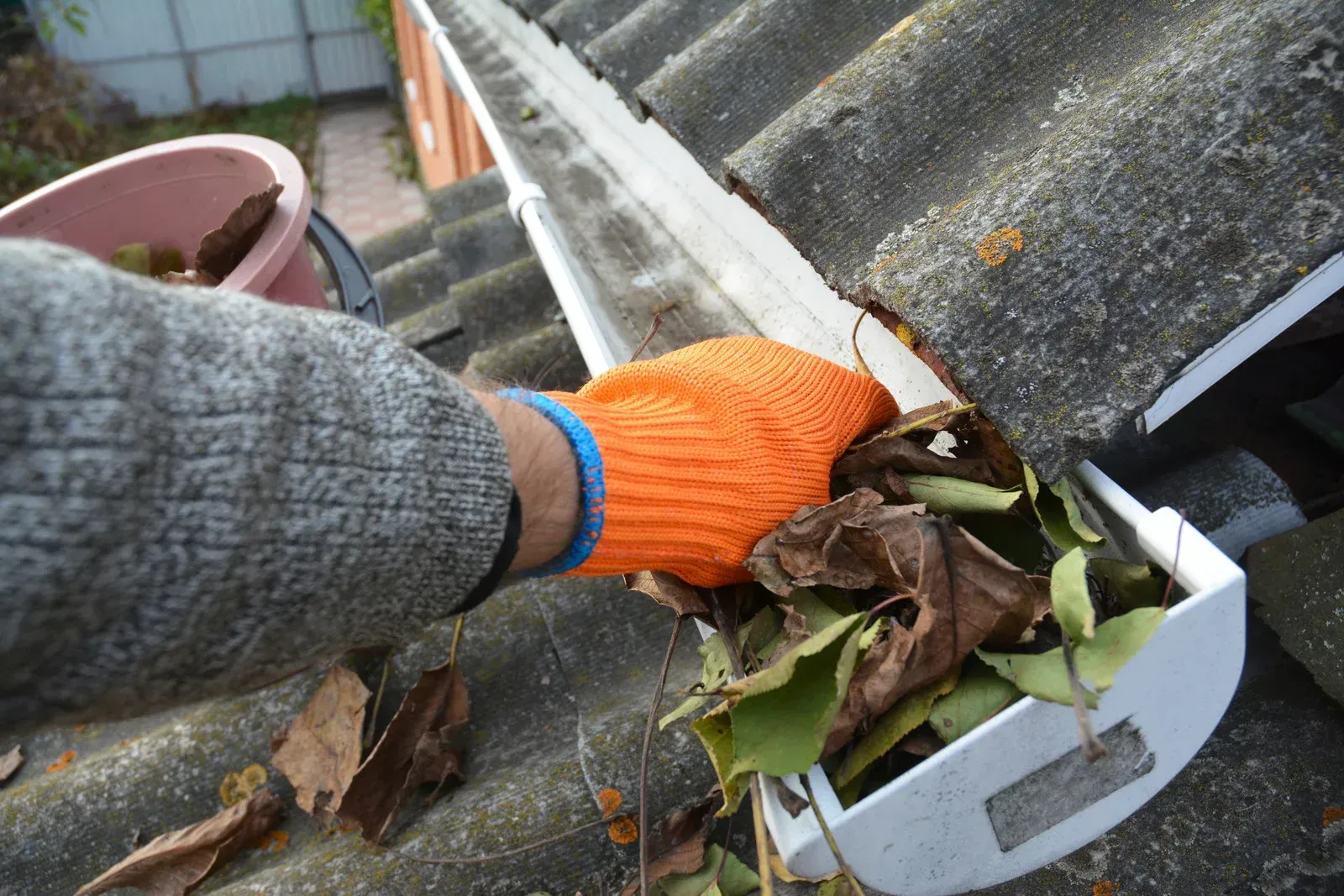
The most common cause we find is simple blockage, which drives the bulk of overflow calls. Leaves, shingle granules, and windblown debris collect at the downspout outlet first, then back up the run. Water that cannot reach the outlet rises over the front edge and falls exactly where you do not want it. The tell is overflow on one side while the rest of the run stays dry.
Sagging and lost pitch come next. Gutters hang on spikes or hidden hangers fastened into the fascia, and over years the weight of trapped water and debris, plus repeated freezing, works those fasteners loose. Once a section droops, water pools there instead of flowing out, and standing water speeds the next failure. A run holding water hours after rain has a pitch problem.
Two more causes hide in plain sight. Separated seams on older sectional gutters leak as the sealant gives up under temperature swings, showing drips or rust streaks under a joint. And downspouts that are too small, too few, or aimed right at the wall overflow even when the gutter is clean, dumping water against the foundation.
How We Inspect a Gutter System
On a service call we start at the roof edge with the system dry, checking hanger spacing, the pitch of each run with a level, and the condition of the fascia underneath. We probe seams and end caps for soft sealant and hairline separation, then run water from the high end to watch where it clears and exits, following each downspout to confirm water lands well away from the foundation.
The findings repeat. We frequently find hangers spaced too far apart, sealant gone brittle at the seams, and downspouts dropping water two feet from a basement wall. Often a gutter a homeowner assumed was broken simply needed its pitch reset and its outlet cleared.
Repair or Replace
A single failed seam, a loose hanger, or one clogged outlet is a repair. These targeted fixes restore years of service, and you can safely clear a reachable clog or reseal a low seam yourself if the ladder work is stable.
Replacement makes sense when the same run keeps failing in new spots, when the fascia behind it has softened, or when a patchwork of old sectional pieces leaks at every joint. A continuous run formed on site removes nearly all the seams that fail over time. Honest answer: sometimes a reseal holds for years, and sometimes it hides fascia rot spreading behind it. Press the wood behind the gutter. Firm wood means repair. Spongy wood means the water has already moved past the gutter, and you are protecting the house now, not the gutter.
Why Central Pennsylvania Is Hard on Gutters
Our region runs gutters through a cycle milder climates never see. Wet autumns drop heavy leaf loads from the mature hardwoods common across the county, packing outlets right before the cold arrives. Winter then brings repeated freezing and thawing: water trapped in a clogged or poorly pitched gutter freezes, expands, and pries at seams and hangers, while ice building at the roof edge backs meltwater up under the shingles.
This is why local gutters need more drainage capacity and tighter hanger spacing than a generic national spec suggests. A system that copes in a dry climate will sag and overflow here within a few seasons. We size downspouts and set pitch around these freeze cycles and leaf loads, because a gutter that cannot empty before the first hard freeze becomes an ice problem, not just a water problem.
Keeping Your Gutters Working
Clear debris at least twice a year, in late spring and after the leaves drop, and more often under overhanging trees. After any major storm, walk the perimeter to confirm water still exits the downspouts cleanly. Each season, check that downspout extensions still point away from the house. Before winter, make sure every outlet is clear so meltwater has somewhere to go during a thaw, the best defense against ice damage in our climate.
Mistakes That Make Things Worse
The most common one is treating overflow as a cleaning problem when it is a pitch or capacity problem. Clearing leaves feels productive, but if the gutter still pools afterward, the cause is untouched and the water keeps working on your fascia. Another is sealing a seam without cleaning and drying it first, so the new sealant never bonds. Many also leave downspouts discharging right at the foundation because the extension looks unsightly, then wonder why the basement weeps. None of these are careless; each simply misses what the water is doing.
Frequently Asked Questions
How often should I clean my gutters in Central Pennsylvania?
At least twice each year, once in late spring and again after fall leaf drop. Homes surrounded by mature trees often benefit from a third cleaning. Wet autumn weather commonly packs debris into outlets, creating blockages that can freeze, restrict drainage, and cause preventable winter damage.
Why do my gutters overflow even after cleaning?
Overflow after cleaning usually signals a problem beyond debris buildup. Downspouts may be undersized, insufficient for the roof area, or poorly positioned. The gutter pitch may also have flattened over time, allowing water to pool instead of draining properly toward the outlet during storms.
Can I fix a sagging gutter myself?
A single loose hanger on a low, accessible section may be suitable for a careful homeowner to tighten or replace. However, if multiple hangers have failed or the fascia feels soft, professional inspection is recommended because hidden wood rot may already be developing behind.
What damage can a neglected gutter actually cause?
Neglected gutters can direct water against the home rather than away from it. Over time this may cause fascia and soffit deterioration, foundation erosion, basement moisture intrusion, landscaping damage, and winter ice buildup along the roof edge that threatens shingles and underlayment.
How do I know if I need repair or full replacement?
Inspect the fascia board behind the gutter by pressing gently against the wood. If it feels firm and damage is isolated, repair is often sufficient. If the wood feels soft or multiple joints leak, replacement with a seamless system is usually advisable.
Dedicated Gutter Professionals Serving Local Homeowners
Reading your
gutters
comes down to one principle: water tells you what is wrong by where it goes, so watch where it exits and where it lingers. In Central Pennsylvania that reading matters more than almost anywhere, because our freeze cycles and heavy leaf loads turn a small backup into ice and foundation trouble faster than a milder climate would. When you want a trained eye on your system, Drip Free Seamless Gutter LLC
brings over 30
years of field experience to homes across Snyder County, including Selinsgrove, Middleburg, Shamokin Dam, Beaver Springs, and Freeburg. Call us when the water starts telling you something, and we will tell you exactly what it means.