How Seamless Gutters Are Custom-Formed On Site
August 30, 2026
What to Check First When You Notice a Problem
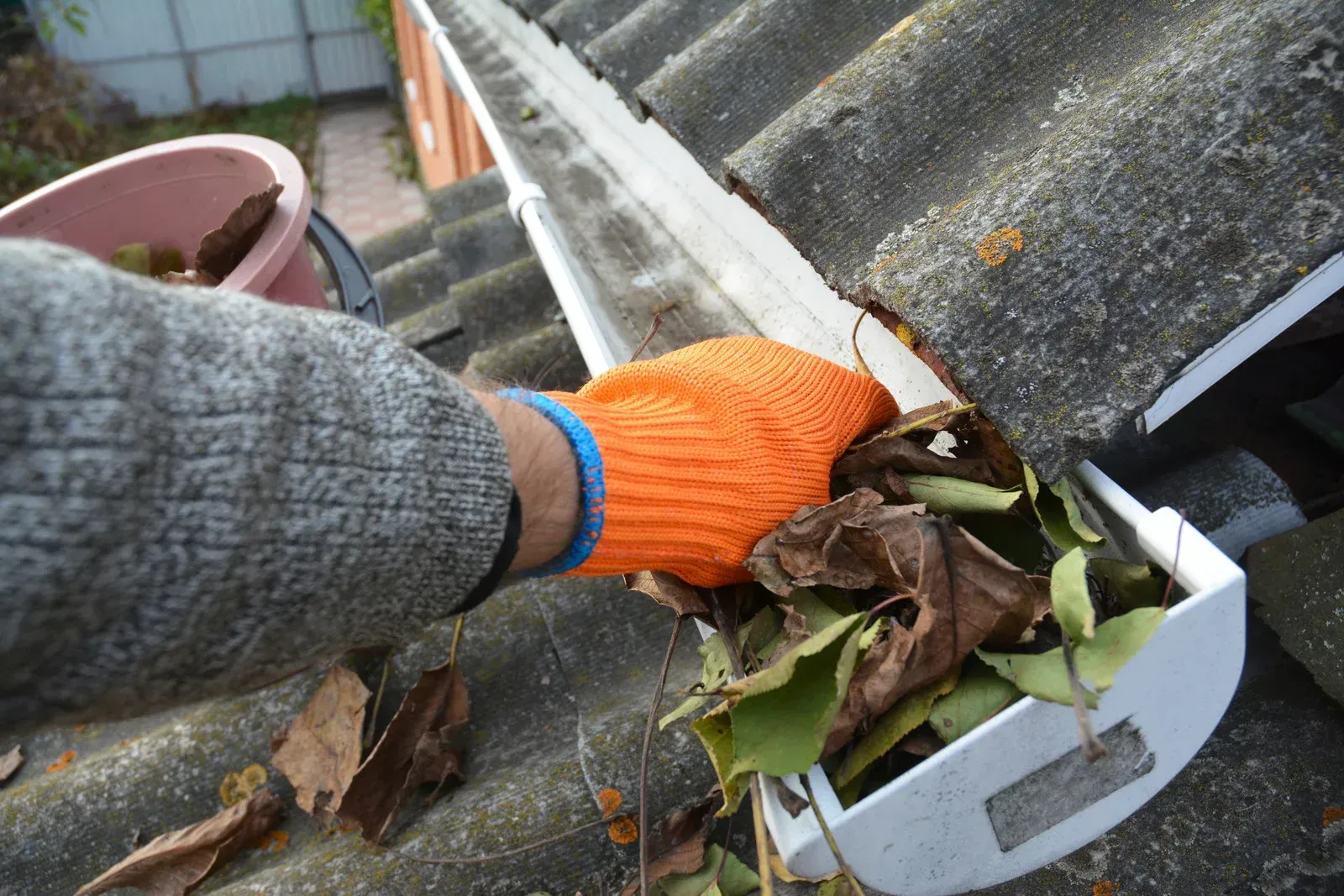
TIP: Pour a five gallon bucket of water into the gutter at the end farthest from the downspout. If it drains briskly and exits clean, your slope and outlet are fine and any issue is a localized clog. If it pools or backs up, you have a pitch problem or a deeper blockage.
QUICK ANSWER: A seamless gutter isn't cut from a stock length at a warehouse. A crew brings a roll-forming machine to your driveway, feeds in a coil of painted aluminum, steel, or copper, and shapes it into a continuous run cut to the exact measurement of your roofline. The real skill isn't the machine itself. It's everything around it: measuring every eave and corner before a single foot gets formed, picking the right metal gauge for the run, checking the profile as it comes off the rollers, and mitering each corner by hand to match angles that are rarely a clean 90 degrees. That precision is what keeps a gutter from sagging, leaking at the corners, or pulling away from an odd roofline five years down the road.
Stand in a driveway on installation day and you'll see something that looks more like light manufacturing than a typical home repair. There's a trailer, a spool of metal, and a machine that turns flat coil into a finished gutter profile in a matter of seconds per foot. But the part that actually determines whether that gutter performs for the next twenty years happens before and after the machine runs. It happens in the tape measure, the miter cuts, and the eyes of whoever's checking the work.
Measuring Every Roofline Before Anything Gets Cut
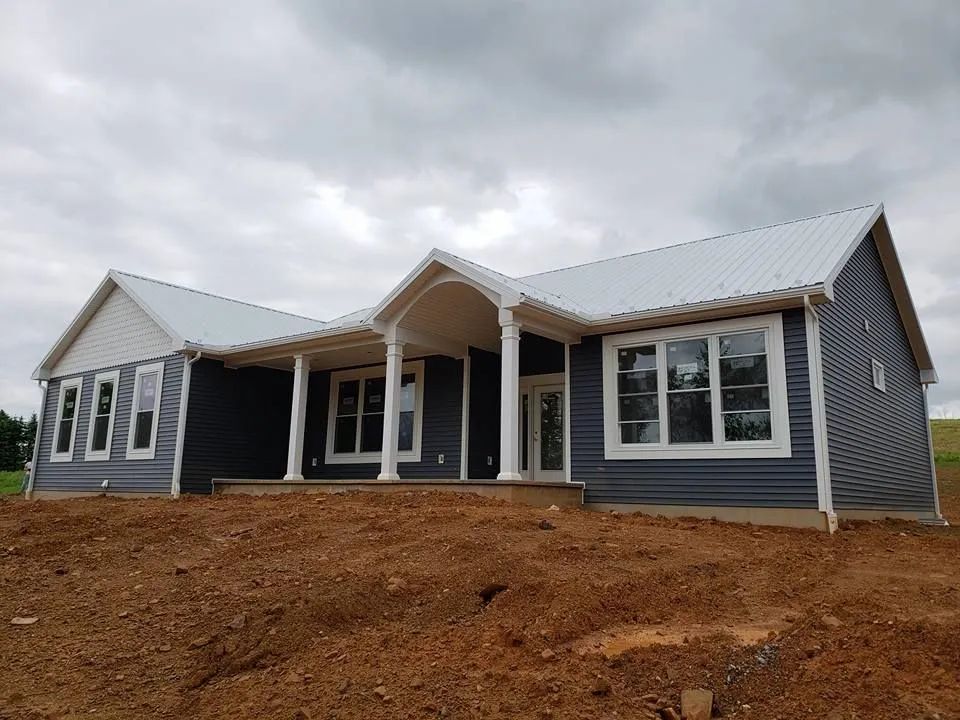
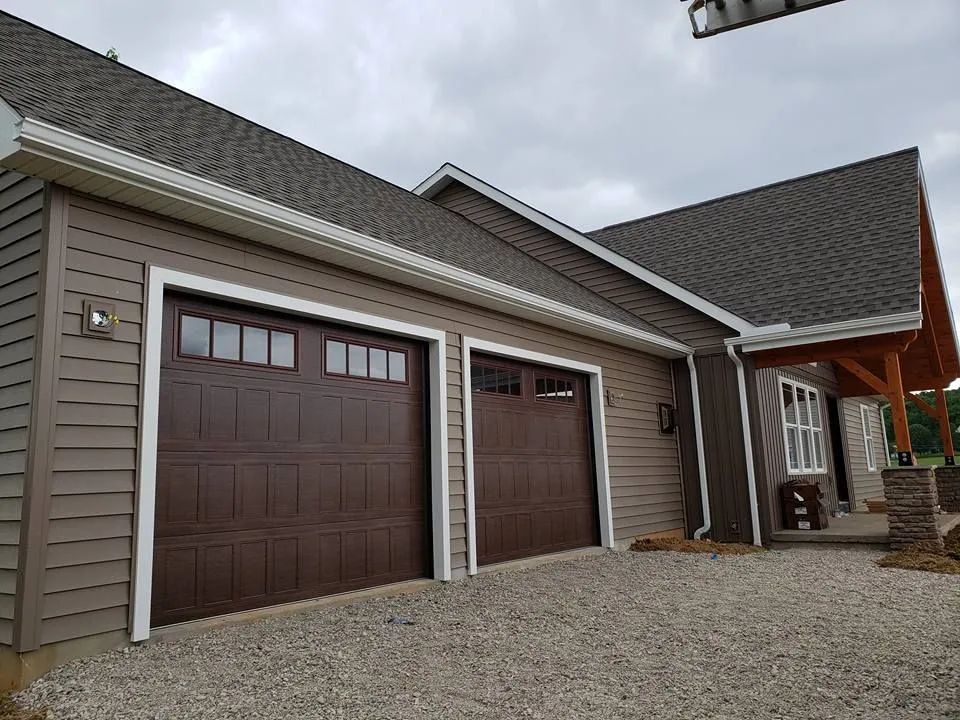
No two houses in Snyder County have the same roof geometry, and that's the whole reason this gutter gets formed at your address instead of trucked in from a factory. A crew walks the perimeter first, measuring each fascia run, each corner, and each spot where the roofline breaks for a dormer, a bay window, or a porch overhang. Older farmhouses around Middleburg and Richfield often have additions tacked on over the decades, which means three or four different roof pitches meeting at odd angles rather than one clean rectangle.
Every one of those measurements gets recorded before the machine touches a single spool of coil. Get one wrong by even an inch and the run either falls short of the corner or overshoots it, and there's no splicing a seamless gutter back together once it's cut. A short piece patched in with a joint defeats the entire purpose of going seamless in the first place. So the measuring pass isn't a formality. It's the step that decides whether the rest of the day goes smoothly or turns into a scramble to re-cut a section.
Commercial buildings add a layer to this. A strip mall or an apartment building might have four or five roof sections at different heights, plus parapet walls and roof drains that residential jobs never deal with. The measuring process has to account for every transition point, because a box gutter on a flat commercial roof behaves differently than a K-style gutter on a pitched residential one, and the fabrication has to match.
Choosing the Coil: Metal, Thickness, and Color
Once the measurements are locked in, the crew picks the coil. This is where a lot of homeowners assume "aluminum" is the only decision, but thickness matters just as much as material. Residential aluminum coil commonly runs in two gauges: a lighter option and a heavier one, often labeled by thickness in thousandths of an inch. The thinner gauge costs less to produce and works fine on smaller, well-protected runs. The heavier gauge resists denting from ladders, branches, and hail, and it holds its shape better across long unsupported spans, which is why a lot of contractors default to it on exposed elevations or anywhere ice tends to build up along the eave.
Steel coil, usually galvalume, shows up more on commercial jobs because it's stiffer and handles higher water volume without flexing. Copper is its own category entirely. It's soft enough to form cleanly but expensive enough that it's mostly reserved for historic homes or architectural accents where the look matters as much as the function.
Color is decided here too, and it's not just an aesthetic pick. The coil comes pre-finished with a baked-on coating, so the crew has to match or complement the home's trim before the run starts, because there's no repainting a formed gutter after the fact without voiding the finish warranty on the coil itself. A mismatched spool means stopping, swapping coil, and re-threading the machine, which is exactly the kind of delay a careful crew avoids by confirming color against the fascia before the first foot ever runs.
TIP: Ask your installer what gauge they're running on your job, not just what material. A 6-inch aluminum gutter in the heavier gauge holds up noticeably better under a loaded ladder or a falling branch than the thinner option, and the price difference is smaller than most homeowners expect relative to the added durability.
What Actually Happens Inside the Machine
The roll-forming machine itself is a long, narrow unit that lives on a trailer and gets set up level and stable before anything feeds through it. Flat coil enters one end and passes through a series of rollers, each one bending the metal a fraction further than the last, until the flat strip has become a finished K-style or half-round profile by the time it exits the other side.
A good crew doesn't just start feeding coil at full speed. The first few feet get run as a test section, then stopped and inspected. The operator is checking for rippling along the face, buckling at the seams, or an edge that isn't sitting flush, because a misaligned roller or a coil that's feeding in crooked shows up in that test piece before it shows up in your actual gutter. Catching it there costs a few feet of scrap metal. Catching it after the whole run is up on the house costs a callback.
Once the test section checks out, the machine runs continuously until it hits the measured length, and a cutting blade at the exit end trims it clean. The run can be nearly any length the roofline calls for, which is the entire point of forming it this way instead of connecting ten-foot factory sections with sealant and rivets.
Cutting Corners That Aren't Actually Square
This is the part of the process that separates a rough job from a tight one. The machine only produces straight runs. Every corner, every inside turn, every spot where a porch roof meets the main roofline has to be fabricated by hand using a miter box or hand tools, and it's rarely a simple 45-degree cut. A lot of older homes in this region have additions, bump-outs, and rooflines that meet at angles nobody planned around a standard miter template.
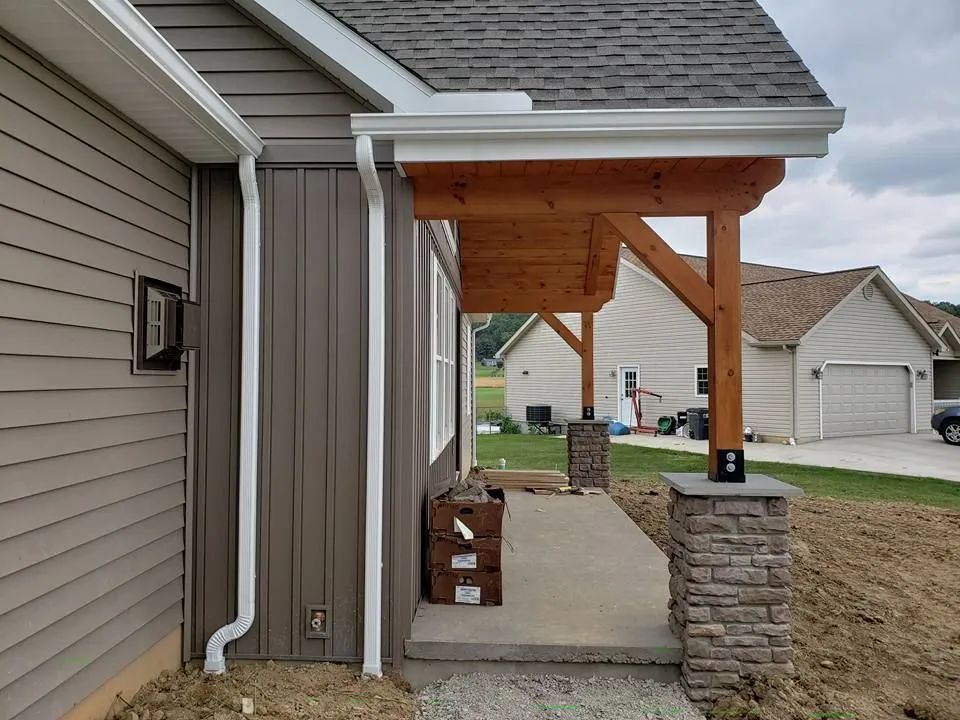
A fabricator measures the actual angle at that corner, not an assumed one, and cuts each side of the miter to match before sealing and riveting the joint. Get that angle even a few degrees off and water finds the gap during the next hard rain. This is also where end caps and downspout outlets get formed and crimped into place, small pieces but ones that take real hand skill, since a poorly crimped outlet is one of the more common places a seamless system develops a slow leak years later.
I've seen installers try to rush this part because it feels like the "small stuff" compared to running the machine. It isn't. The straight runs almost never fail. The corners and outlets are where problems show up.
Residential and Commercial Fabrication, Side by Side
The forming process is identical whether the crew is working a two-story home on a quiet Selinsgrove street or a commercial strip with three separate roof sections. What changes is scale. Homes typically get a 5-inch or 6-inch K-style profile sized to a normal residential roof. Commercial buildings often call for a wider profile or a box-style gutter, sized up to handle the water volume coming off a much larger, flatter roof surface.
Because the fabrication happens on site either way, a commercial crew can match unusual roof transitions, parapet returns, and multiple drain points without pre-ordering parts from a catalog and hoping they fit. That flexibility matters more on commercial work than people assume. A flat roof with poor drainage doesn't just annoy tenants. It puts real weight and water pressure on a system that has to handle far more volume than a residential eave ever will.
WARNING: Forming and installing in freezing temperatures changes how the metal behaves. Aluminum coil that's been sitting in a cold trailer overnight can be stiffer and more prone to cracking its finish at tight bends than metal that's been allowed to reach a more workable temperature first. If your installation is scheduled during a hard cold snap, ask whether the crew is adjusting their process for it rather than running the coil straight off a frozen trailer.
Why the Custom Fit Matters More Here Than in Milder Climates
Central Pennsylvania puts a seamless system through a real workout. Hardwoods drop a heavy leaf load every fall, and the region swings through repeated freeze-thaw cycles all winter, with meltwater refreezing along the eave overnight and thawing again the next afternoon. A gutter that's a fraction too shallow, pitched wrong, or joined with a sloppy miter is going to show that weakness the first time ice builds up and puts extra weight on a corner seam.
A run formed and cut to the exact roofline, with corners fabricated to the real angle instead of a generic template, distributes that seasonal stress evenly instead of concentrating it at a weak joint. That's the practical payoff of doing the fabrication this way. It isn't just about looking clean without visible seams. It's about a system built to handle the specific geometry of your roof and the specific climate stress it sees every winter.
Frequently Asked Questions
How long does it take to form and install a seamless gutter system?
Most residential seamless gutter projects can be measured, formed, and installed in one day. Larger homes, complex rooflines, multiple corners, additions, or commercial properties may require additional time for precise fabrication and installation.
Can a seamless gutter fit an unusual roofline?
Yes. Because seamless gutters are formed on site, installers can measure unusual rooflines, dormers, bay windows, additions, and irregular angles individually. Each section can then be fabricated to match the property's specific dimensions accurately.
Does metal gauge make a difference for homes?
Yes. A heavier metal gauge generally provides better resistance to dents and deformation from ladders, branches, hail, water, and ice. It can also maintain its shape better across longer gutter runs and exposed roof elevations.
Why do seamless gutters have visible corners?
Seamless refers to the long, straight gutter runs formed from continuous coil. Corners still require separate mitered pieces because rooflines change direction. These joints are carefully measured, cut, sealed, and secured for proper drainage.
What's the biggest fabrication mistake that causes problems?
Poorly fabricated corners and downspout outlets are common trouble spots. Incorrect miter angles, loose connections, or inadequate sealing can allow water to escape. Careful measuring, cutting, crimping, and sealing helps prevent these problems.
Reliable Gutter Performance Starts With Precise Fabrication
A seamless gutter system works best when every part is matched to the roofline it serves. On-site forming allows installers to account for unusual angles, varying elevations, and the seasonal demands common throughout Snyder County, PA, rather than relying on standard sections that may require excessive joints or adjustments. Careful measuring, controlled forming, and properly fabricated corners create a cleaner installation with fewer vulnerable connection points and better support for the flow of rainwater and melting snow.
With more than 30
years of experience, Drip Free Seamless Gutter LLC
brings that hands-on fabrication approach to properties throughout Snyder County, PA. The finished system is shaped around the structure rather than forcing the structure to accommodate predetermined gutter lengths. That attention to fit helps preserve the appearance of the roofline while creating a dependable drainage system designed around the property's specific construction and local weather conditions.